


close
Choose Your Site
Global
Social Media
Views: 0 Author: Site Editor Publish Time: 2025-08-26 Origin: Site

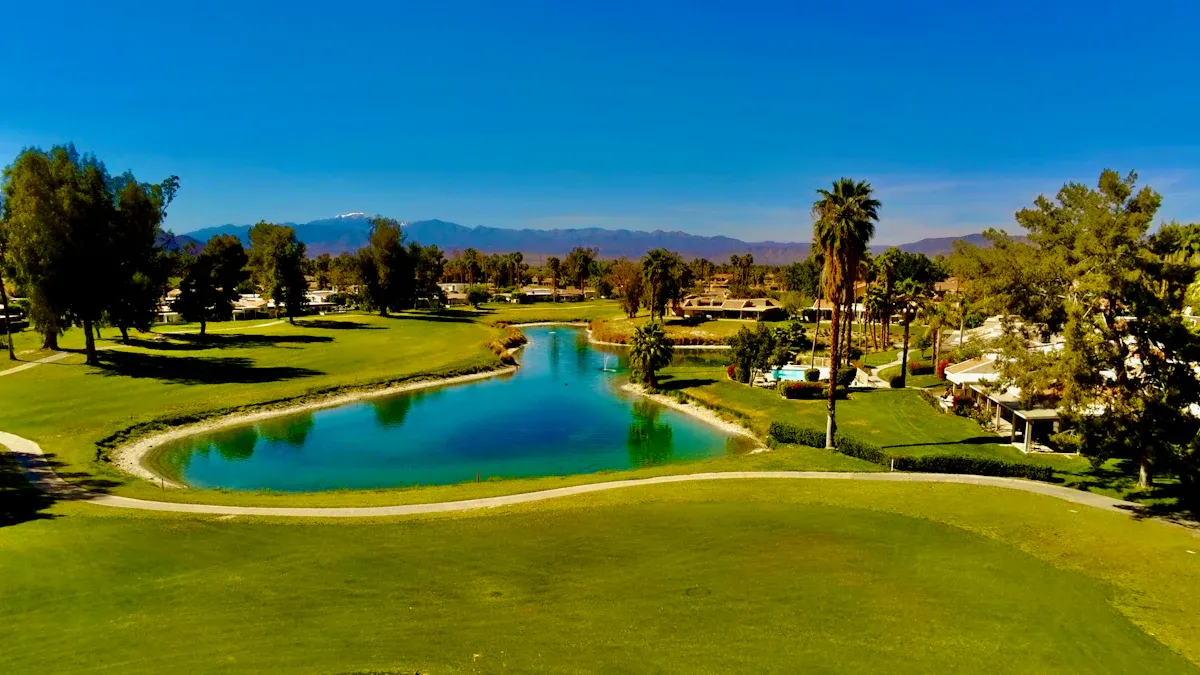
You want to know if a golf putting green or real grass is better. Your answer depends on what matters most to you. Many people prefer natural grass for its look and feel, but it needs more water and care. Golf putting green options, like a backyard putting green or an indoor putting green, offer year-round use with less work. Plastic fibers from artificial turf can affect the environment, so you should think about sustainability. Some users like the convenience of artificial turf, especially if you want less maintenance.
Artificial turf putting greens give a smooth ball roll. The ball moves the same way every time. You can use them in any weather. You can practice whenever you want.
Taking care of artificial turf is easier than real grass. You do not need to mow it. You do not need to water it. You do not need to worry about bugs.
Artificial turf costs more to put in at first. But it saves money later. You do not need to pay for upkeep. You do not need to buy water or chemicals.
Synthetic greens last longer than real grass. They do not get damaged as easily. You get a strong surface for many years.
Picking artificial turf helps save water. It also uses fewer chemicals. This makes it better for the environment.
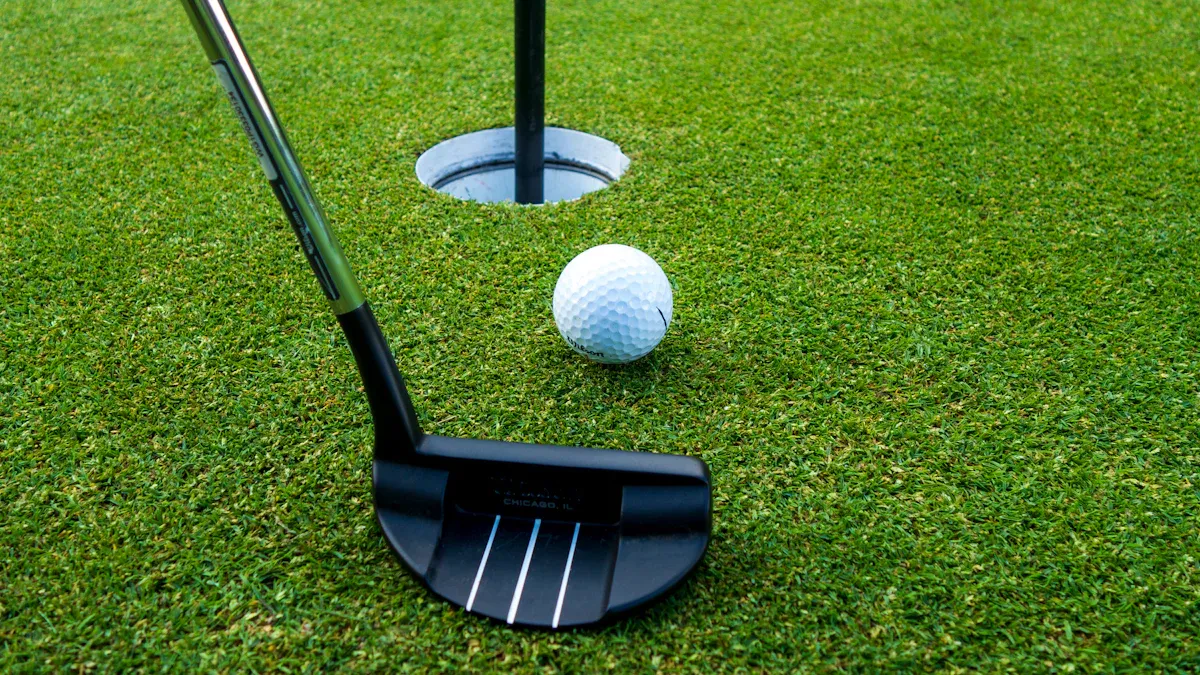
When you practice putting, the way the ball rolls matters a lot. You want a surface that gives you a true, predictable roll every time. Here is how the two surfaces compare:
A natural grass putting green changes with the weather, moisture, and soil. You might notice bumps or dips that make the ball roll differently each day.
Synthetic putting greens use dense, even fibers. These fibers create a flat, smooth surface. You get a consistent ball roll without skidding or bouncing in odd directions.
Synthetic putting greens do not develop holes or patches. The surface stays the same, so you can trust your putts.
When you use a golf putting green made from artificial turf, you can practice your stroke and see the same results every time. This helps you build confidence and improve your skills.
Tip: If you want the most reliable ball roll, choose a high-quality synthetic putting green with a tight weave and a level base. Regular brushing keeps the fibers upright and the roll smooth.
Weather can change how a putting green performs. You want a surface that works well in rain, sun, or cold.
Synthetic putting greens handle all kinds of weather. The turf does not freeze or get brittle in winter. It stays green and soft, even after snow or frost.
In rainy weather, synthetic putting greens drain water quickly. The turf has tiny holes and a special base that lets water flow through fast. You will not see puddles or mud, so you can play soon after a storm.
During hot, dry weather, synthetic turf does not dry out or turn brown. Some types use materials that reflect heat, so the surface stays cooler.
Natural grass putting greens can become muddy after rain or hard during drought. You might have to wait for the grass to dry or recover before you can play.
Here is a table showing drainage rates for different turf types:
| Turf Type | Drainage Rate (inches per hour per sq. yard) |
|---|---|
| Hole-Punch Synthetic | Over 30 |
| Flow-Through Synthetic | Up to 400 |
| Natural Grass | Much slower, can become waterlogged |
You can use a synthetic putting green all year, no matter the weather. This makes it a great choice if you want to practice often and not worry about rain or heat.
You want to know how much time you will spend on putting green maintenance. Artificial turf putting greens save you a lot of time. You do not need to mow, water, or treat for pests. Most tasks are quick and easy. Here are the main jobs you will do:
Brush the turf often to keep the fibers standing tall.
Check and add infill when needed to keep the surface soft.
Sweep or rinse the turf to remove dirt and leaves.
Pull weeds that grow around the edges.
Rinse the surface in summer to cool it down.
Real grass putting green maintenance takes much more time. You must mow the grass often to keep it short. You also need to water it, especially in hot weather. Other tasks include:
Aerate the soil to help roots grow.
Seed bare spots to keep the grass thick.
Fix ball marks and divots after play.
Treat for pests and diseases.
Tip: If you want to spend less time on putting green maintenance, artificial turf is the better choice.
Both types of putting greens can have problems. You can avoid most issues with good care and planning.
For artificial turf, common problems include:
Uneven surfaces if the base is not flat.
Water pooling if drainage is poor.
Turf edges lifting if not secured well.
Flat or matted fibers if you skip brushing.
Stains or odors if you do not clean up spills or pet waste.
You can fix these by making sure the base is level, using proper drainage materials, and securing the edges with stakes or nails. Brush the turf often and rinse it to keep it clean.
For real grass, you may face:
Brown or dry patches from lack of water.
Muddy spots after heavy rain.
Weeds, pests, or diseases that harm the grass.
Uneven ground from animal activity or weather.
You can solve these by watering on a schedule, using pest control, and repairing damage right away. Regular mowing and aeration also help keep the surface smooth.
Note: Good putting green maintenance keeps your surface looking great and playing well, no matter which type you choose.
When you plan a putting green, you need to think about the cost to install it. Artificial turf putting greens cost more at the start. You pay for the turf, the base, and the labor. Real grass costs less to install, but you will spend more later on care.
Here is a table showing average installation costs:
| Type of Green | Cost per Square Foot | Notes |
|---|---|---|
| Artificial Turf (Backyard) | $15 – $40 | Smaller greens cost more per sq. ft.; larger ones cost less per sq. ft. |
| Artificial Turf (Indoor) | $1,000 – $10,000 | Needs special flooring and lighting in some cases |
| Portable Roll-Up Mats | $50 – $500 | Easy to set up, no site prep needed |
| Real Grass (Sod) | $1 – $2 | Cheaper upfront, but needs more care |
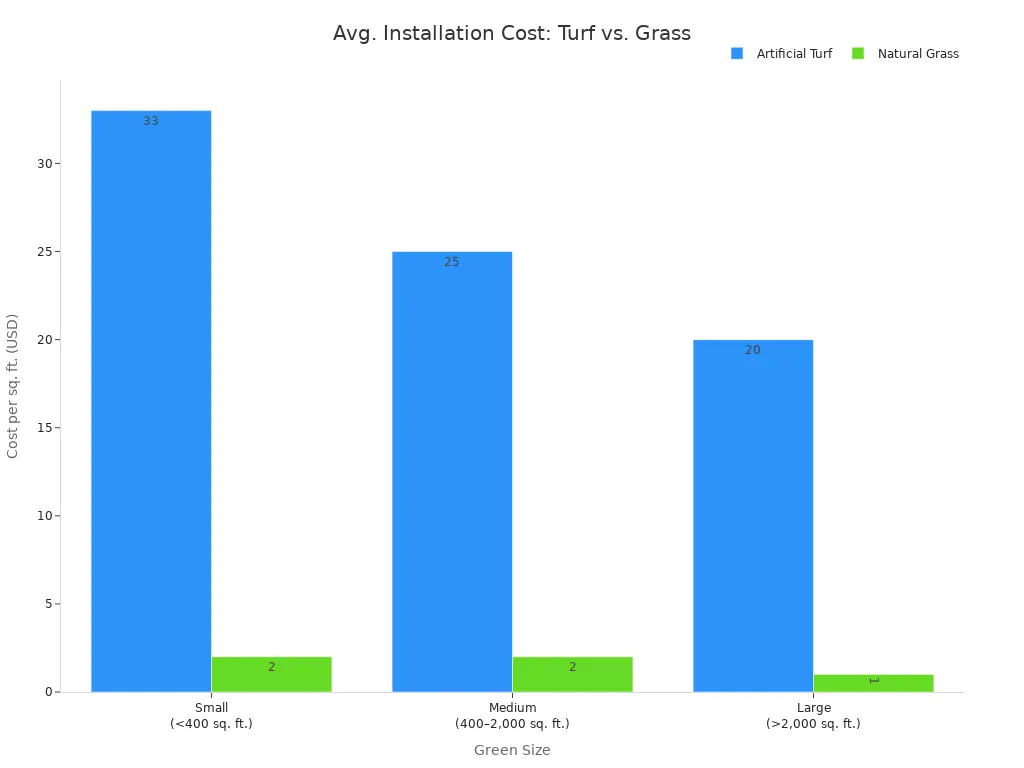
Professional installation for backyard turf greens can range from $1,500 to over $15,000, depending on size and features. DIY options cost less but may not last as long or drain as well.
Tip: If you want a quick, low-cost option, try a portable mat. For a long-lasting, realistic surface, invest in professional installation.
You also need to think about how much you will spend each year to keep your green in good shape. Artificial turf costs less to maintain. You brush it, clean it, and sometimes add more infill. Real grass needs mowing, watering, fertilizing, and pest control.
| Type of Green | Yearly Maintenance Cost | 10-Year Total Cost | 20-Year Total Cost |
|---|---|---|---|
| Artificial Turf | $250 – $350 | $2,500 – $3,500 | $5,000 – $7,000 |
| Real Grass | $1,600 – $3,300 | $16,000 – $33,000 | $32,000 – $66,000 |
Artificial turf lasts 15–20 years before you need to replace it. Real grass may need new sod every 8–10 years. Over time, you save money with artificial turf because you do not pay for water, fertilizer, or mowing.
Note: Artificial turf costs more at first, but you spend much less on care. Real grass is cheaper to install, but you pay more every year to keep it green and smooth.
You want your putting green to last, even with daily use. Synthetic putting greens stand up well to wear and tear. You can let kids play, move furniture, or let pets run across the surface without worrying about damage. The turf fibers stay upright because the infill acts like soil, keeping the surface smooth and helping the ball roll true. If you brush the turf and add infill when needed, you keep the green looking and playing its best. Products like Envirofill help prevent mold and mildew, so your green stays clean and safe.
Real grass putting greens need more care to avoid damage. You must watch for worn spots from toys, pets, or heavy foot traffic. Grass can get thin or patchy if you do not fix problems quickly. Mud and divots can appear after rain or lots of play. You need to repair these spots to keep the green smooth.
Tip: Synthetic putting greens resist damage from daily use better than real grass. You spend less time fixing problems and more time practicing your putts.
The lifespan of your putting green depends on the material, how you use it, and how well you care for it. High-quality synthetic putting greens can last 20 to 25 years if you brush, clean, and add infill regularly. Most synthetic putting greens need replacement every 8 to 15 years, depending on the quality and how much you use them. You should inspect your green at least once a year, especially if you use it often or live in a place with harsh weather.
Here is a table comparing the average lifespan and care needs:
| Putting Green Type | Average Lifespan | Major Maintenance Needed |
|---|---|---|
| Synthetic Putting Greens | 8–25 years | Brushing, infill, cleaning |
| Real Grass Putting Greens | Varies (needs reseeding or new sod every 8–10 years) | Mowing, watering, coring, repairs |
Real grass putting greens need daily mowing and care. You may need to reseed or lay new sod every 8 to 10 years. Major repairs, like coring, happen two or three times a year. Synthetic putting greens need less frequent but regular care to stay in top shape.
When you pick real grass or artificial turf, you affect the environment. Real grass putting greens need lots of water to stay green. You might use millions of gallons each year for a big green. Natural grass can use up to 55 gallons per square foot every year. This adds up fast, especially in dry places. You also pay more for water and use up local supplies.
Artificial turf putting greens do not need watering to look nice. You only rinse them sometimes to keep them clean. This saves thousands of gallons of water each year. Synthetic turf helps you save water and protect this important resource.
Here is a table that shows how much water each type uses:
| Aspect | Real Grass Putting Green | Artificial Turf Putting Green |
|---|---|---|
| Water usage per 1,000 sq ft | About 623 gallons each time you water | Very little, about 60 gallons each month |
| Watering frequency | Two times a week (can change by climate) | Only rinse once in a while |
| Monthly water consumption | Around 4,984 gallons | About 60 gallons |
| Water usage ratio | Uses 83 times more water than artificial turf | Uses much less water |
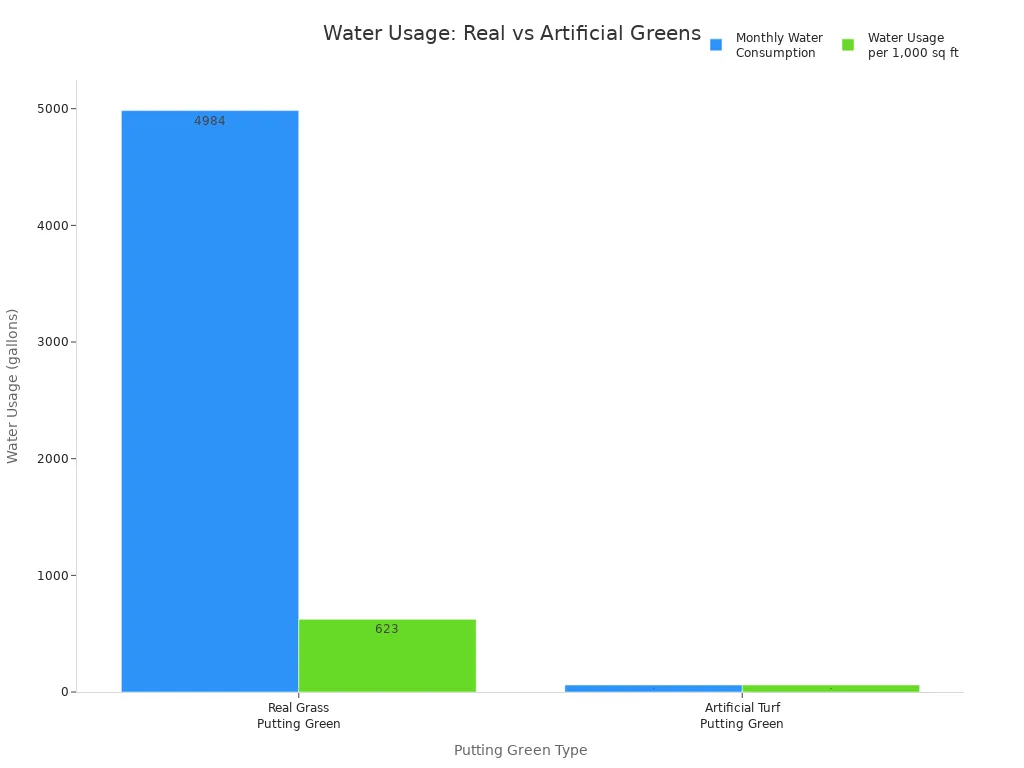
If you choose artificial turf, you save water and money. You also help your community by using less water.
You should think about chemicals when caring for a putting green. Real grass needs fertilizers, pesticides, and weed killers. These chemicals can wash into the ground and rivers when it rains. This can hurt fish, plants, and animals. It can also make drinking water unsafe.
Artificial turf does not need these chemicals, so you avoid chemical runoff and keep water cleaner. But artificial turf has its own problems. The turf may have things like lead, PFAS, and other toxins. Over time, these can turn into tiny plastics or dust. This can hurt the environment and your health.
If you want to stop chemical runoff, artificial turf is better. But you should still think about how turf materials affect the planet over time.
You help the earth by using less water and fewer chemicals. Both choices have good and bad sides, so think about what is most important to you and your community.
When you step onto a golf putting green, the look and feel matter a lot. Many golfers say that high-quality artificial turf can look almost the same as a natural grass putting green. Companies like InspireScapes design their greens with realistic contours and natural-looking borders. You see a lush, green surface that stays beautiful all year. The Prime Putt putting mat, for example, gives you a surface that rolls like real grass and reacts to your putts in a lifelike way. The ball moves smoothly, and the turf feels soft under your feet. Some users notice a slight difference in sound, but the overall putting experience feels close to playing on real grass.
You can also choose the color and pile height of your artificial turf. This lets you match the green to your yard or indoor space. Many people like to add features such as sand traps or small hills to make the green look even more like a real course. These details help you enjoy a space that looks professional and inviting.
Tip: Customizing your golf putting green with the right turf color and pile height can make it blend perfectly with your landscape.
You want to enjoy your time on the green, whether you are practicing alone or playing with friends. Artificial turf putting greens give you a smooth, reliable surface every day. You do not have to worry about brown patches or muddy spots. This means you can focus on your putting experience and have fun.
Indoor and backyard greens let you practice anytime, no matter the weather. Many users say they see real improvement in their game because they can practice more often. You can invite friends over for a game, or just relax and putt by yourself. The low maintenance of artificial turf gives you more time to play and less time working on upkeep.
You get a clean, green surface all year.
You can personalize the size, shape, and features.
You enjoy a reliable surface that helps you improve your skills.
A golf putting green made from artificial turf offers convenience and satisfaction for all skill levels. You get a space that looks great, feels real, and makes every practice session enjoyable.
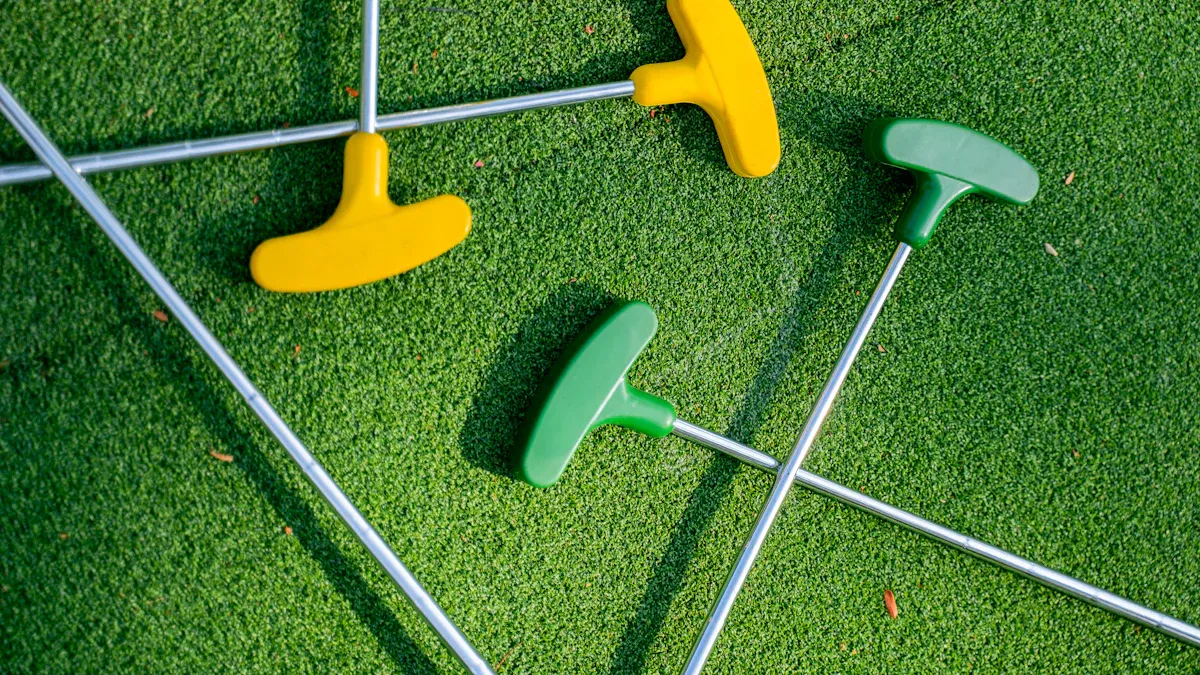
If you want to practice putting at home, you have a few choices. Each type works best for different spaces and needs. You can pick an indoor putting green, a backyard putting green, or a portable mat. Picking the right one helps you get better at putting.
You can put an indoor putting green in a basement, spare room, or garage. These greens use turf that feels like real grass. Many let you choose the shape, slope, and even add your own logo. Some need a pro to install, but you can also buy mats that are easy to set up. The best indoor greens give you a smooth roll and work all year. You just need to brush and clean them to keep them nice.
A backyard putting green gives you a place to practice outside. You can pick the size, shape, and hills to fit your yard. Many backyard greens have drains, landscaping, and turf that is safe for pets. Some people add seats or fire pits to make it more fun. You can choose turf like TigerTurf Diamond Series or Everlast Cascade. These give you a real ball roll and last a long time. A backyard green lets you play golf at home with family and friends.
Portable mats are good if you want to practice anywhere. You can roll out a mat in your living room, office, or backyard. These mats use fake turf and come in many sizes and styles. Some mats have putters, balls, and targets. The best mats give you a true roll and are easy to store. Many golfers use these mats when they travel or have little space.
Here is a table to help you compare the main features:
| Feature / Customization Aspect | Indoor Putting Greens | Backyard Putting Greens | Portable Putting Greens |
|---|---|---|---|
| Environment | Indoor rooms | Outdoor yards | Any location |
| Turf Quality | Tour-grade | Durable, weatherproof | Simple, artificial |
| Customization | High | Very high | Moderate |
| Installation | Professional/DIY | Professional | DIY, easy |
| Maintenance | Low | Moderate | Very low |
| Portability | Fixed | Fixed | High |
| Cost | Moderate to high | High | Low |
| Use Case | Year-round practice | Realistic outdoor play | Quick, flexible use |
Tip: If you want something cheap and easy to move, try a portable mat. If you want a green that lasts and looks great, pick a backyard putting green with good turf.
When you pick between artificial turf and real grass, think about what you want.
If you want to practice a lot, artificial turf gives you the same surface every time. It works in all kinds of weather.
If you do not want to spend much time or money, artificial turf is easier. You do not need to mow or water it.
If you want to help the environment, artificial turf saves water and does not need chemicals.
Look at putting green choices that fit your space, how much you want to spend, and how much you want to practice. Choose the one that lets you have fun playing golf at home every day!
You can install a small putting green yourself. You need to prepare the ground, lay the base, and roll out the turf. For large or complex greens, you may want professional help.
Artificial turf feels soft and smooth. High-quality turf looks and feels close to real grass. You may notice a slight difference in texture and sound.
Tip: Choose turf with a realistic pile height for the best feel.
You sweep leaves and dirt off the surface. You rinse with water to remove dust. You brush the turf to keep fibers upright. You can use mild soap for stains.
Real grass can attract insects and small animals. You may see worms, ants, or birds. You control pests by mowing, watering, and using safe treatments.
Note: Regular care helps keep your green healthy and pest-free.


